Skip to content
Rapid City in August is a town that runs hot in every sense. Thursday nights downtown are packed, the Rally traffic is still rolling through the Hills, the fairgrounds are getting ready, and out east along Anderson Road a subdivision that was farm ground four years ago is filling in with framed houses. If you have lived here a while, you can feel the shift. If you just moved here, this is the version of Rapid City you get to learn first.
We wire houses for a living, so we watch this town from a slightly different angle than most. We see which neighborhoods are pulling permits, which panels are undersized for what people actually plug in, and which streets lose power first when a summer cell comes over the Hogback. This post is a look at what is happening in Rapid City this summer, what it means for the people buying and building here, and where the electrical side of it quietly matters.
Summer in Rapid City: what is actually going on right now
The summer calendar here is dense, and most of it is free. Summer Nights brings free live music to downtown on Thursday evenings, with bands, food, drinks, and a street scene that turns Main Street into the busiest four blocks in western South Dakota. Main Street Square runs its own Thursday series through the season, and the Black Hills Farmers Market keeps going alongside it.
Right now the region is in the middle of the 86th Sturgis Motorcycle Rally, running August 7 through 16, 2026 under the theme “Sturgis Salutes America.” Sturgis itself has limited lodging, so a large share of riders base out of Rapid City, Spearfish, and Deadwood and ride in. That is why Rapid City hotels, restaurants, and side streets feel different for ten days in August even though the event is thirty minutes north.
After the bikes clear out, the Central States Fair and Rodeo runs August 21 through 29, 2026, and the season rolls into the Great Downtown Pumpkin Festival in September and the Black Hills Powwow in October. For a city of roughly 68,000 people, the event density is unusual, and it is a big part of why people who visit end up moving here.
Why a local electrician pays attention to the event calendar
Two reasons. First, summer event season overlaps exactly with severe weather season, and outdoor power at a packed venue is a real load. Second, this is when people fall in love with the town, and falling in love with the town is step one of buying a house here. Nine months later that same person is asking whether their panel can handle a car charger.
The growth story behind the busy summer
Rapid City is not busy by accident. Elevate Rapid City, the regional economic development and chamber organization covering Pennington, Meade, Lawrence, Butte, Custer, and Fall River counties, has been tracking a sustained population climb and the housing squeeze that came with it.
Their regional housing study put hard numbers on something everyone here already felt. The study found demand for 9,191 new housing units through 2030, driven by a 15 percent population increase between 2010 and 2020 and a forecast approaching 20 percent growth by 2030. Rental vacancy in Rapid City has been sitting in the 1 to 2 percent range against a healthy target of 5 to 7 percent, which is the technical way of saying there is nowhere to move.
A large share of that pressure traces back nine miles northeast. Ellsworth Air Force Base is the designated first main operating base for the B-21 Raider, and legislative testimony has projected total estimated growth of 4,064 personnel, spouses, and children by fiscal year 2041, with a projected regional demand of over 10,000 homes between 2025 and 2030. Ellsworth already carried a total economic impact of $886.8 million in 2023 by Elevate’s accounting.
That is the pressure. Now here is where it lands on the ground.
Apple Valley: how 120 acres of Rapid Valley farm ground became a neighborhood
If you want a single project that explains Rapid City’s last five years, it is Apple Valley. It sits in Rapid Valley, north of S.D. Highway 44 and east of Anderson Road, outside city limits but inside Rapid City’s three mile platting jurisdiction, which is why you will find it on both county and city agendas.
The approval fight
In early 2022 the Pennington County Commission worked through a comprehensive plan amendment and two rezoning requests that cleared the way for more than 460 homes on about 120 acres. The commission voted 3 to 2 to change the future land use from agriculture and low density residential to urban residential, and 3 to 2 again on rezoning roughly 107 acres. Commissioners Deb Hadcock and Travis Lasseter were the dissenting votes. Andy and Jim Scull of Pink Cabin, the developer, fielded questions from commissioners while roughly a dozen area residents spoke against it, worried that a farming pocket was about to become a small city.
That tension is the honest version of Rapid City growth. It is not a press release. It was a split vote with neighbors in the room.
The financing and the phasing
The economics were built around affordability. Reporting from the county approval described an affordable housing TIF district covering infrastructure improvements along Anderson Road between East Highway 44 and Long View Road, with lots sold to Hunter Homes at $45,000 per lot and homes ranging from $200,000 to $285,000. The first four phases projected 80 lots a year, with the whole build estimated at eight to ten years depending on demand. Water and sewer loop into the Green Valley system through the Rapid Valley Sanitary District, eventually tying into Rapid City’s 42 inch main near State Highway 44.
Phase One went through the city planning commission as a preliminary subdivision plan for 80 residential lots ranging from 6,552 to 9,054 square feet. Additional plat items for Apple Valley and the adjacent Poeppel Subdivision came back through the commission in 2024, each carving out of two 40 acre parcels.
State money moved it forward. South Dakota’s Housing Infrastructure Financing Program approved $4,357,729 in ARPA grant funds plus $1,628,968 in general housing infrastructure grant funds for Apple Valley infrastructure covering 242 single family lots. In 2026 the housing authority agreed to let Apple Valley receive up to an additional $1,240,237 in ARPA grants if earlier approved projects do not draw their full amounts, with all ARPA funding required to be spent by December 31, 2026.
What it means if you bought there
A new build in Apple Valley is a specific kind of house. It is a modern code compliant home built to a price point, which means the electrical system was designed to meet requirements and the budget, and probably not to anticipate everything you will add over the next fifteen years. That is not a criticism of the builders. It is how production housing works everywhere.
The practical version: your service size, your panel space, and your conduit paths were set before you had an opinion about them. Adding a Level 2 EV charger installation, a shop subpanel, a hot tub, or a standby generator installation later is far easier when someone thought about it during rough in. We have worked in Apple Valley Subdivision, and the difference between a house that was wired with headroom and one that was wired to minimum shows up the first time a homeowner wants to add anything.
What the city is building underneath all of it
Rooftops need pipes and pavement. Rapid City’s Water Reclamation Facility expansion is the largest infrastructure project in city history, with estimated completion in winter 2028. Secondary clarifiers and a new dewatering building are scheduled for completion in 2026, and a solids holding tank in 2027. The stated purpose includes expanding treatment capacity, future proofing for population growth projections, and supporting regional economic growth.
On the surface, construction season is what you would expect. The city maintains an interactive road construction map, and Public Works has been pushing residents toward it as the fastest way to see start dates, completion timelines, traffic impacts, and contractor details. Anyone who has sat on Haines or Knollwood this summer already knows the map exists for a reason.
The grid: this is the part homeowners should read twice
Everything above adds electrical load, and the utility side of that story moved fast this year.
Lange II comes online
Black Hills Energy is finishing Lange II, a 99 megawatt natural gas fired plant next to the existing Lange I facility on Deadwood Avenue, expected to come online in the second half of 2026. It uses six dual fuel engines that can reach full output in under five minutes, with dual fuel capability, on site fuel storage, and underground natural gas storage for supply interruptions. Lange II is designed to replace the 1960s era Ben French generators, which are scheduled to come offline in 2027.
Rates are changing
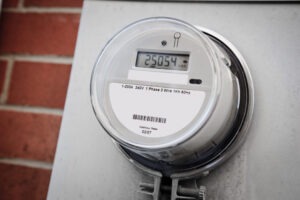
On February 19, 2026, Black Hills Energy filed a rate review with the South Dakota Public Utilities Commission, its first electric base rate request since 2014. The company is seeking to recover roughly $523 million in system investments made since then. Subject to PUC approval, the proposal would raise the average South Dakota residential monthly bill by about $25, or roughly 25 percent, which the company frames as about 2 percent annually over the 12 years since rates were last set. Interim rates take effect in August 2026, with final rates anticipated in the first quarter of 2027.
Reliability is the other half
Grid strength is not theoretical here. In December 2025 a historic wind event knocked out power to over 25,000 Black Hills Energy customers, with nearly 11,000 still dark the following evening and crews arriving from North Dakota and Colorado to help restore service. Black Hills Electric Cooperative reported more than three quarters of its rural network out at the same time.
Summer brings its own version. The National Weather Service Rapid City office maintains running summaries of significant thunderstorm, hail, wind, and flooding events for this forecast area, and there is a long list. Add utility Public Safety Power Shutoff events during high wind and low humidity fire conditions, which Black Hills Energy has used in the Southern Hills, and the picture is clear enough: outages here come from weather, and weather here does not ask permission.
| What is happening | Why it matters at your house | Where it shows up |
|---|---|---|
| Rapid City area needs roughly 9,191 new housing units through 2030 | More production built homes wired to the minimum required for the plan | New builds in Rapid Valley, Box Elder, north and east Rapid City |
| Ellsworth B-21 mission growth through 2041 | Steady inflow of buyers who arrive with EVs, shop tools, and finished basement plans | Box Elder, Rapid Valley, Ashland Heights |
| Lange II online second half of 2026, Ben French retiring 2027 | Regional generation is being rebuilt, not expanded without limit | Deadwood Avenue, northwest Rapid City |
| Interim electric rates effective August 2026 | Bigger loads carry a bigger monthly consequence than they did last year | Every Black Hills Energy account in the service territory |
| High wind and severe storm outages | Backup power moves from a nice idea to a planned system | Whole service territory, worse on exposed ridgelines |
What this means if you are a new homeowner here
Most of what we get called for in Rapid City falls into four buckets, and the growth story above feeds all four.
1. Panel and service capacity
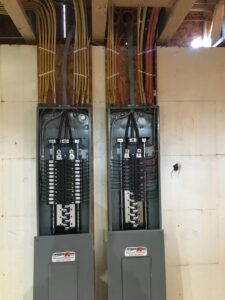
The single most common ceiling on a Rapid City home is service size. A house wired to run lights, a furnace, and a range has different headroom than a house running a car charger, a heat pump, a hot tub, and a shop. A panel replacement or a full 100A, 200A, or 400A service upgrade is the work that unlocks everything else, and it is worth having the load calculation done before you buy equipment rather than after.
2. EV charging
The Black Hills is not the place most people picture for electric vehicles, and yet the infrastructure kept arriving. South Dakota now has more than 120 public EV charging stations statewide including 78 Level 2 and 49 DC fast chargers, and the state’s EV Fast Charging Plan is built around federal NEVI funding along Interstate 90 and Interstate 190 into Rapid City. Public charging is for travel days. The charger that actually matters is the one on your own wall, and that is a permanent circuit sized for continuous load, not an extension cord problem. Our page on home EV charger installation covers hardwired versus plug in and what a proper receptacle for an EVSE actually costs and why.
3. Standby generators
After December 2025, the conversation around whole home standby generators in this region changed. A standby unit with an automatic transfer switch is a wired system, permitted and inspected, sized to a load calculation and tied to a fuel source. It is one of the higher risk installations in residential electrical work, which is exactly why it belongs with a licensed contractor rather than a truck and a weekend.
4. New construction wiring
If you are building in Apple Valley, Ennen, Hillsview, Shepherd Hills, or anywhere else on the edge of town, the cheapest electrical upgrade you will ever buy happens while the walls are open. Conduit to the garage, a spare pair of breaker spaces, a properly located generator interlock point, and dedicated circuits for the things you have not bought yet cost very little at rough in. See our approach to new construction electrical and to whole home surge protection, which matters more in a lightning prone summer climate than most people expect.
Wired here since 1999
Wires R Us is a second generation electrical contractor serving Rapid City and the Black Hills. We do panel and service upgrades, EV charger installations, standby generators, and new construction and multi family wiring. If you are building, buying, or finally fixing the thing you have been working around, talk to us.
Request a QuoteYou can see the full service area on our Rapid City electrician page, and the wider region on our Black Hills service area page.
Rapid City homeowner questions we get every summer
Is Apple Valley inside Rapid City limits?
No. Apple Valley sits in Rapid Valley outside city limits, inside Rapid City’s three mile platting jurisdiction, which is why plats have gone through both Pennington County and the Rapid City Planning Commission. Water and sewer service run through the Rapid Valley Sanitary District.
Do I need a service upgrade before installing an EV charger?
Sometimes. It depends on your existing service size and your actual connected load, which requires a load calculation rather than a guess. Plenty of 200 amp homes handle a Level 2 charger with no changes. Plenty of older 100 amp services do not.
Are electric rates going up in Rapid City?
Black Hills Energy filed a rate review with the South Dakota PUC in February 2026 requesting its first electric base rate increase since 2014. Interim rates take effect in August 2026 with final rates expected in the first quarter of 2027. Check your own account and the PUC docket for current figures.
Is a standby generator worth it in the Black Hills?
That is a personal call, but the outage history is real. The December 2025 wind event alone put more than 25,000 Black Hills Energy customers in the dark. If you have well water, medical equipment, a home business, or a finished basement you do not want to see flood, backup power is a straightforward risk decision.
When should I involve an electrician on a new build?
Before rough in, ideally during plan review. Adding capacity while the walls are open costs a fraction of adding it later.
Local project details in this article are drawn from Pennington County and Rapid City public meeting records, South Dakota Housing Development Authority program documents, Black Hills Energy regulatory filings, and local news reporting, all linked in text. Development timelines and utility rates change. Verify current figures with the relevant agency before making financial decisions.