Skip to content
Electrical power surges are far more common than you may think, and they can do a lot of damage to your home if it’s not protected properly.
Factors That Can Lead to Electrical Power Surges
Internal Factors
- Faulty or outdated wiring – Can no longer handle your home’s electrical load efficiently because it was installed poorly, has loose connections, or has just deteriorated over time. This may lead to irregular voltage flow, which often shows up through dangerous outlets with burn marks or buzzing sounds, a burnt smell in the air, and frequent tripping.
- High-powered electrical devices – These require a lot of energy to function. When they cycle on and off, it can cause brief power surges that damage more sensitive electronics.
- Overloaded circuits – Circuits can only carry so much wattage at once. When you overwhelm them – either by plugging multiple high-wattage devices into one outlet or using multiple cords – the demand for power increases beyond what your system can handle. This leads to This leads to overheating and voltage fluctuations.
- Short circuits – Active wires can touch and allow current to surge through the circuit, which can lead to intense heat, potential arcing, and severe overloading of electrical components.
- Ground faults – A sudden flow of electricity can occur when a live conductor touches a grounded object, forcing an immediate, intense surge of current.
External Factors
- Utility companies – Power fluctuations often occur when utility companies are working on their systems. Surges often stem from:
- Grid switching
- Maintenance
- Malfunctioning or damaged equipment
- Downed power lines
- Industrial demand
- Power outages and restorations – While there are usually no safety issues when the power is off, once it’s been restored, surges can result from several factors, including:
- Sudden voltage spikes when electricity is restored
- Simultaneous demand from multiple homes
- Grid instability
- Lightning strikes – The rarest cause of power surges, but the most destructive. They can cause irreversible damage to multiple devices almost instantaneously.
Protecting Your Home from Electrical Power Surges
- Surge protectors – There are two main types of surge protectors:
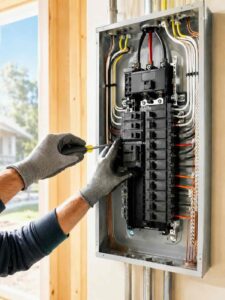
- Whole-home surge protectors – Installed at your home’s electrical panel. They offer protection for all your devices and appliances. This is your first line of defense against excessive voltage.
- Point-of-use surge protectors – Power strips that protect individual devices by filtering out smaller voltage spikes.
- Unplug electronics
- Check grounding
- Avoid overloading outlets
- Upgrade outdated wiring and panels
Quick Power Surge Overview
| Cause | Type | What Happens | Main Risk |
|---|---|---|---|
| Faulty or outdated wiring | Internal | Irregular voltage flow caused by loose, damaged, or deteriorating wiring | Damage to outlets, appliances, and electronics |
| High-powered devices | Internal | Large appliances create brief voltage spikes when cycling on and off | Wear on sensitive electronics |
| Overloaded circuits | Internal | Too much electrical demand is placed on one circuit | Overheating and voltage fluctuations |
| Short circuits | Internal | Current surges when active wires come into contact improperly | Severe equipment damage and fire risk |
| Ground faults | Internal | Electricity suddenly moves to a grounded surface or object | Intense current surge and safety hazard |
| Utility company issues | External | Grid switching, maintenance, or damaged equipment disrupts voltage | Whole-home surge exposure |
| Power restoration | External | Electricity returns suddenly after an outage | Sudden spikes affecting multiple devices |
| Lightning strikes | External | Massive surge enters the electrical system almost instantly | Severe and widespread damage |
How to Tell Your Home May Be at Higher Risk
Some homes are more likely to experience electrical power surges than others. You may be at greater risk if your home has older wiring, frequent breaker trips, flickering lights, multiple large appliances running on the same circuits, or a history of power issues after outages or storms. If any of those signs sound familiar, it may be worth having your electrical system inspected before a surge causes more serious damage.
If you’re worried that your home may be prone to surges, just contact the team at Wires R Us, and we’ll send someone to evaluate your electrical systems and guide you through the steps you need to take to protect your home.