Skip to content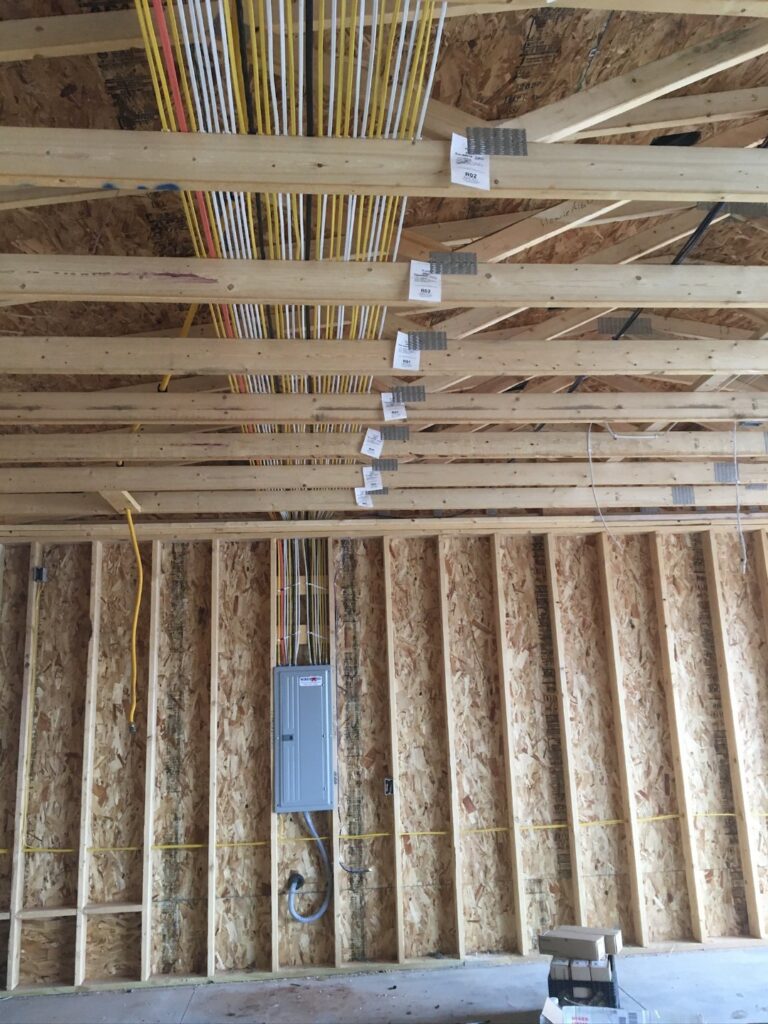
If you’re building a new home in the Black Hills, the electrical system is probably not the part of the project that keeps you up at night. However, new construction electrical planning is one of the highest-return decisions you can make as a homeowner, and it costs a fraction of what it takes to retrofit the same capacity after the walls are closed. The time to think about your home’s future electrical needs is before anyone picks up a drywall panel.
Start With the Right Service Size
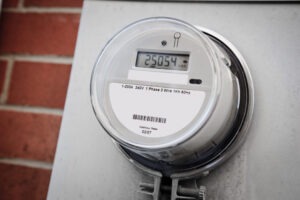
The single most foundational decision during new construction electrical planning is service size. 100-amp services used to be the standard on residential builds, but that’s changed as our electrical needs have grown. A modern home with central heat pump HVAC, an electric range or cooktop, an electric dryer, a water heater, and even one EV charger can easily push a 100-amp service to its limits under the NEC load calculation methods.
At Wires R Us, we encourage any new construction client planning an all-electric HVAC or any form of electric vehicle charging to start at 200 amps and upgrade as needed.
For larger properties, or homes intended to support solar, a whole-home generator, and EV charging simultaneously, a 400-amp service deserves serious consideration. We’ve covered some of the load math behind why 200-amp is the practical floor for EV readiness, and the same logic applies here with even more room to scale.
Rough In for What You Don’t Own Yet
One of the most cost-effective things a new construction electrician can do is run conduit and pull wire to locations where equipment will eventually live. This is commonly referred to as roughing in, and in a new build it costs very little because the walls are open and the crew is already on site.
The most common version of this we recommend is installing a dedicated 50- or 60-amp branch circuit to the garage wall, capped off and ready to receive a Level 2 EV charger. The homeowner may not currently own an electric vehicle, but the house will likely outlast that decision. During framing, the cost is essentially limited to wire, conduit, and a breaker space. After drywall, those same materials are still required, along with cutting, patching, and repainting finished walls.
The same principle applies to generator transfer switch infrastructure. If you think there is any chance you will want a whole-home generator while you live in this house, having the transfer switch location and conduit run to where the generator will sit is substantially cheaper to do at rough-in than later. This is particularly relevant in the Black Hills, where winter storms can knock out power and a generator is often less of a luxury and more of a practical protection against frozen pipes and damaged property.
Panel Capacity and Circuit Planning
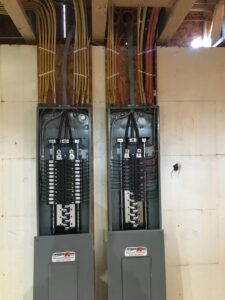
A 200-amp service isn’t enough if the panel itself fills up within two years of move-in. A larger panel gives you room to add dedicated circuits as life changes without the cost and disruption of a subpanel or panel replacement.
The National Electrical Code requires dedicated circuits for many fixed appliances, and they are considered best practice for equipment such as refrigerators, microwaves, and garbage disposals. Dedicated circuits matter more than many homeowners realize at the design stage. A panel where every circuit is clearly labeled and logically grouped makes the home easier to maintain, troubleshoot, and sell.
One area where we consistently see new builds underserve their owners is outdoor circuits. A house with a rear patio, a detached garage, a shop building, or planned future outbuildings should have conduit and circuit capacity planned from the start. Adding an outdoor circuit after the fact typically involves trenching, which is significantly more expensive than running conduit in open ground before landscaping is in.
Smart Home Wiring and Low-Voltage Infrastructure
New construction electrical planning also has to account for smart home infrastructure. This doesn’t mean loading the house with technology on day one, but it does mean wiring for it intelligently so that adding it later is straightforward.
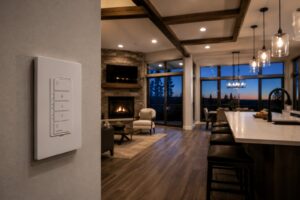
At a minimum, this means planning switch locations that can accommodate smart dimmers and switches. It is far less complicated than retrofitting a house that was wired for traditional toggles.
Structured low-voltage wiring, meaning a central location for network, cable, and data distribution, is another new-construction decision that adds very little to the overall construction cost and a great deal to add afterward. The conduit runs from a central distribution point to living spaces, bedrooms, and any home office areas, giving the homeowner flexibility to adapt as networking technology changes. The best time to install that conduit is when the crew is already running wire through the same walls.
Surge Protection at the Panel Level
Surge protection should be one of your key concerns during the design stage, not an afterthought. Whole-home surge protection installed at the panel level during new construction is one of the best-value additions available, providing protection for every circuit in the house.
This matters particularly in the Black Hills, where lightning strikes are a real and recurring event, and where power grid surges from storm activity, utility switching, and restoration events happen regularly.
Thinking About Reliability From the Start
The components used in a new build matter just as much as the wiring itself. Choosing reliable, listed components from the start is important, because the cost of replacing failed equipment in a finished home is always more than the cost of specifying better equipment at installation.
A Word on Local Code and Coordination
South Dakota and its local jurisdictions adopt the NEC on their own schedule, and the adopted edition can affect what’s required or permitted on a given project. Any electrician working on a new build in Rapid City, Spearfish, Sturgis, or the surrounding communities should be actively coordinating with the authority having jurisdiction (AHJ) to confirm which edition is in effect and what local amendments apply. Permit and inspection requirements protect homeowners as much as anyone else, and a house wired correctly and inspected properly is a house with clean documentation for insurance and future sale.
Ready to plan your new build’s electrical system?
Get in Touch with Wires R UsSources
- c3controls. NFPA 70: An Overview of the National Electrical Code for Industrial Business Owners https://www.c3controls.com/blog/nfpa-70-an-overview
- U.S. Department of Energy. Charging Electric Vehicles at Home https://afdc.energy.gov/fuels/electricity-charging-home