Skip to content
One question we hear all the time is whether EVs in the Black Hills are practical. It’s a fair question. South Dakota drivers have to contend with snow, ice, steep grades, mountain roads, and long highway stretches.
However, despite all of this, EVs perform quite well and often have advantages over traditional gas-powered vehicles.
Quick answer: Yes, EVs in the Black Hills work well. Cold weather does reduce range, typically by 20 to 40 percent depending on the vehicle and how cold it gets, but most local driving still falls well within a full charge, and the vast majority of charging happens at home overnight.
EVs Are Genuinely Good in Snow and Ice
Something many people don’t realize is that electric vehicles are naturally well suited to winter driving. We’ve talked to plenty of owners of EVs in the Black Hills who are surprised by how well their vehicles perform.
Their heavy battery packs sit low in the chassis, creating a low center of gravity and balanced weight distribution. Combined with available all-wheel drive and quality winter tires, this gives EVs excellent traction and stability on slippery roads.
How Cold Weather Affects Your Range
When temperatures drop, part of the battery’s energy goes toward heating itself and the cabin. Studies have found that EVs retain roughly 80% of their rated range at freezing temperatures (depending on the model). In more extreme cold, closer to what the Black Hills can see in January, that loss can run higher. In some cases, an EV’s range can be depleted by about 25%.
While that may seem like a massive loss, when you put it into perspective it becomes clear that the cold doesn’t affect drivers all that much. On average, drivers only travel about 37 miles a day. Newer EVs offer 250 to 350 miles of range on a full charge. Even if your car is consuming a bit more energy in winter, you should have more than enough to last you a typical day of driving around town.
Besides, unlike with gas vehicles, if you make a habit of plugging your EV in to charge as soon as you get home, you should always have a full battery the next day.
Preconditioning Makes Cold Mornings Easier
Instead of having to scrape ice off your windshield and idle your car to warm up the engine, many EV owners can simply unplug their car and drive away. This is thanks to a process known as preconditioning.
You can simply set a departure time and while your vehicle is still plugged into the charger, the cabin and battery will heat up and the windows will defrost. Preconditioning draws most of its energy from the charger instead of the battery, making it one of the most effective ways to preserve your winter range.
The Charging Network Across Western South Dakota Is Better Than Many Assume
Another common concern is whether there are enough charging stations in the region. The network across western South Dakota has grown significantly. Tesla operates Superchargers in Rapid City, Spearfish, and Custer. Rapid City alone has more than 100 public charging points across multiple networks.
The network isn’t as dense as California or Colorado, but it’s more than adequate, and it continues to expand every year. For most owners, public charging is something you think about when planning a road trip, not something you rely on for everyday errands.
Home Charging Is the Normal Way to Do It
One thing many people don’t realize is that most owners of EVs in the Black Hills rarely use public charging stations. Around 80% of charging happens at home overnight because most owners simply plug in when they get home. As such, it’s important to know which EV charger is right for your home.
Local Driving and Mountain Roads Play to an EV’s Strengths
Electric motors are especially efficient in city traffic, mountain roads, and stop-and-go driving. Regenerative braking recaptures energy when descending hills, and instant torque provides confident acceleration on steep grades.
Interstate driving is a different story. Highway speeds demand significantly more energy, especially in winter. If you’re covering long distances across South Dakota at 80 miles per hour in below zero temperatures, you’ll see more range loss than you would driving locally around Rapid City. That doesn’t mean an EV can’t do it. It just means highway travel takes a bit more planning, particularly if your route runs between Superchargers.
Can the Grid Handle More EVs?
As the number of EVs on the road grows, so does the concern over the grid and its ability to handle all the increasing demand. However, the concern is often overstated because most EV charging happens overnight, when electrical demand is at its lowest.
By spreading demand out instead of creating sharp peaks, overnight charging allows utilities to use existing infrastructure more efficiently. Many utilities offer reduced time-of-use rates for overnight charging, because it makes better use of generation and distribution equipment that would otherwise sit idle for much of the night.
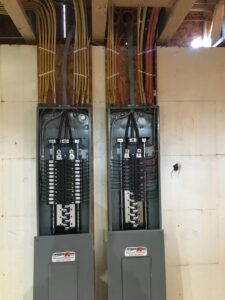
While the electrical grid is generally capable of handling EV charging, your home’s electrical panel may still need upgrades. Check that it has both the space and the amperage for an EV charger installation.
You Stop Thinking About Fueling Your Vehicle
Something that surprises a lot of first-time EV owners is how quickly they stop thinking about fueling at all. Instead of standing outside at a gas pump in the wind, snow, or subzero cold, charging becomes part of a normal routine. You get home, plug in, and walk inside. For Black Hills residents who have spent years pumping gas during winter storms, that convenience tends to matter more than they expected going in.
The Bottom Line
For most Black Hills households, an EV is a practical, reliable, and capable year-round vehicle. They handle winter conditions well, provide more than enough range for typical daily driving, and offer the convenience of charging at home instead of stopping at a gas station.
Like any vehicle, an EV isn’t the right fit for every situation. If you regularly drive hundreds of miles across South Dakota every day, a gas or diesel vehicle may still be the better choice. But for most local drivers, today’s EVs are well suited to life in the Black Hills.
Planning to add an EV charger to your Black Hills home?
Contact Wires R UsSources
- Consumer Reports. How Much Do Cold Temperatures Affect an EV’s Driving Range? https://www.consumerreports.org/cars/hybrids-evs/how-much-do-cold-temperatures-affect-an-evs-driving-range-a5751769461/
- Recurrent. Research: Best EV for Winter & Cold Weather Range https://www.recurrentauto.com/research/winter-ev-range-loss
- International Energy Agency. Global EV Outlook 2026: Electric Vehicle Charging https://www.iea.org/reports/global-ev-outlook-2026/electric-vehicle-charging-chap-6-and-10
- Kelley Blue Book. Average Miles Driven Per Year: Why It Is Important citing Federal Highway Administration data. https://www.kbb.com/car-advice/average-miles-driven-per-year/
- Tesla. Rapid City, SD Supercharger https://www.tesla.com/findus/location/supercharger/rapidcitysupercharger
- PlugShare. Rapid City, South Dakota EV Charging Stations https://www.plugshare.com/directory/us/south-dakota/rapid-city
- Current Results. Rapid City SD Lowest Temperature Each Year based on NOAA data from Rapid City Regional Airport since 1949. https://www.currentresults.com/Yearly-Weather/USA/SD/Rapid-City/extreme-annual-rapid-city-low-temperature.php
- Current Results. Rapid City SD Average Temperatures by Month https://www.currentresults.com/Weather/South-Dakota/Places/rapid-city-temperatures-by-month-average.php
- Green Energy Consumers Alliance. Time-of-Use Rates https://www.greenenergyconsumers.org/drivegreen/timeofuserates
This article is intended as general information about electric vehicle ownership and charging in the Black Hills region. Range, charging times, and cold-weather performance vary by vehicle make and model. For guidance on a specific EV charger installation, contact a licensed electrical contractor.